Three steps to GHG-neutrality
The STIHL climate strategy sets out a solid framework for short-term, medium-term and long-term action for climate protection. Because we know that we need a detailed and considered plan to achieve our ambitious goal: For the STIHL Group to one day leave no CO2 footprint worldwide.
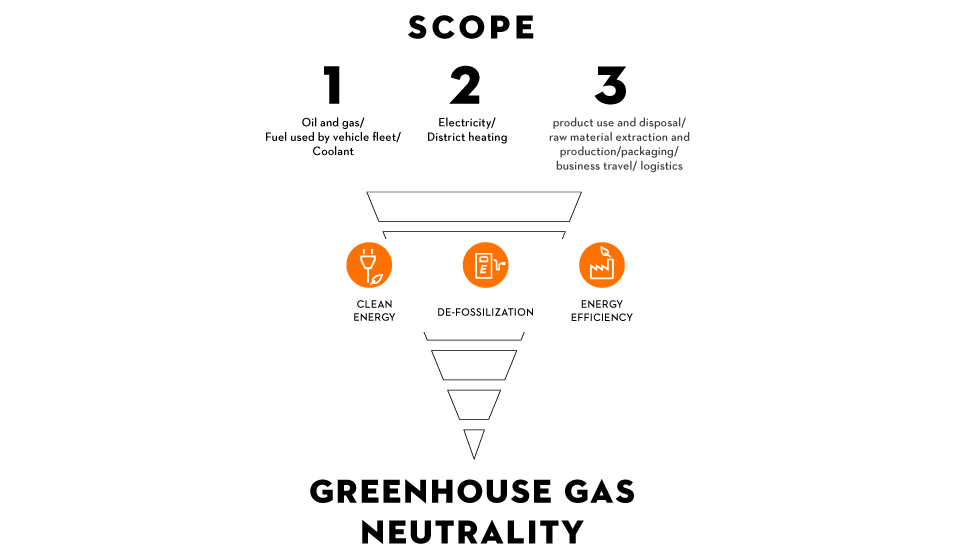
STIHL assumes responsibility for climate protection and plays an active role in shaping it. We are committed to the Paris Climate Agreement and the 1.5°C target for limiting global warming. In doing so, we are guided by the principle that reducing emissions comes before offsetting. Since 2021, STIHL has been making an annual financial contribution to climate protection for Scope 1 and Scope 2 emissions by investing in reforestation measures and purchasing Gold Standard certificates.
Our climate goals:
- Scope 1 and 2: Reduce absolute greenhouse gas emissions by 68.43% by 2034 (base year 2021)
- Scope 3: Reduction by 35% by 2034 (base year 2022)
Our Near-Term Targets are SBTi validated: Target dashboard - Science Based Targets Initiative
Where do our emissions occur?
- Scope 1 includes direct emissions that occur at STIHL primarily from the combustion of heating oil and natural gas for heating buildings as well as in production, assembly and development. In addition, there are fuels for adjustment processes, our vehicle fleet and refrigerant losses.
- Scope 2 includes indirect emissions from our electricity and district heating purchases.
- Scope 3 includes emissions in the upstream value chain from business travel, goods and services, waste and logistics, travel to our employees, fuel production and transport. In the downstream value chain, the emissions result from the use of our products, their recycling, packaging and distribution logistics.
Our path to a positive climate contribution
In order to achieve our targets, we have defined concrete measures to reduce our greenhouse gas emissions.

clean eNergy
Since January 2021, STIHL's German sites have been purchasing electricity exclusively from renewable sources. With an average annual electricity purchase in Germany of around 67,500 MWh, we can reduce our energy-related CO2 emissions in Scope 2 in Germany by around 63 percent by purchasing green electricity.
In the meantime, all STIHL production companies and most of the sales companies have also converted to purchasing green electricity. Through the use of renewable energies, we can significantly reduce our dependence on fossil fuels and greenhouse gas emissions at the same time.
To reduce its ecological footprint, STIHL also relies on regenerative power generation.

Defossilization
Internally, STIHL has set itself the goal of reducing the use of fossil fuels by 40 percent by 2030 compared to 2019. This is also in line with the targets in Scope 1 validated by the SBTi. Fossil fuels used at STIHL are primarily natural gas, but also fuels. With more than 100 individual measures already planned, which include technological innovations such as optimized use of process heat, around 80 percent of the targeted reduction is to be implemented.

Improved energy efficiency
In addition, we want to reduce our energy consumption overall and thus further improve our energy intensity. For a long time now, we have been pursuing a resource-saving approach to production. Efficient use of metal, the economical use of water, electricity and heat, as well as forward-looking building and space planning are among the cornerstones. Many of our production companies are certified according to the ISO 14001 environmental management system. The ISO 50001 certification for energy management systems, which has been in place at the STIHL headquarters since 2013, is to be extended to all production companies of the STIHL Group in the future.
With our continuous measures to improve energy efficiency, we have been saving energy for a long time – despite higher production volumes. The focus is on the implementation of new technologies, such as optimized process heat use and distribution as well as energy control and distribution, but also energy storage, renewal and optimization of our distribution grids for energy, energy-efficient drives and low-consumption lighting systems.


